Coins are not just instruments of trade; they are miniature works of art, rich in history, symbolism, and precision. Each element on a coin serves a purpose — either functional, aesthetic, or historical. Understanding the anatomy of a coin is essential for appreciating its design, authenticity, and collectible value.
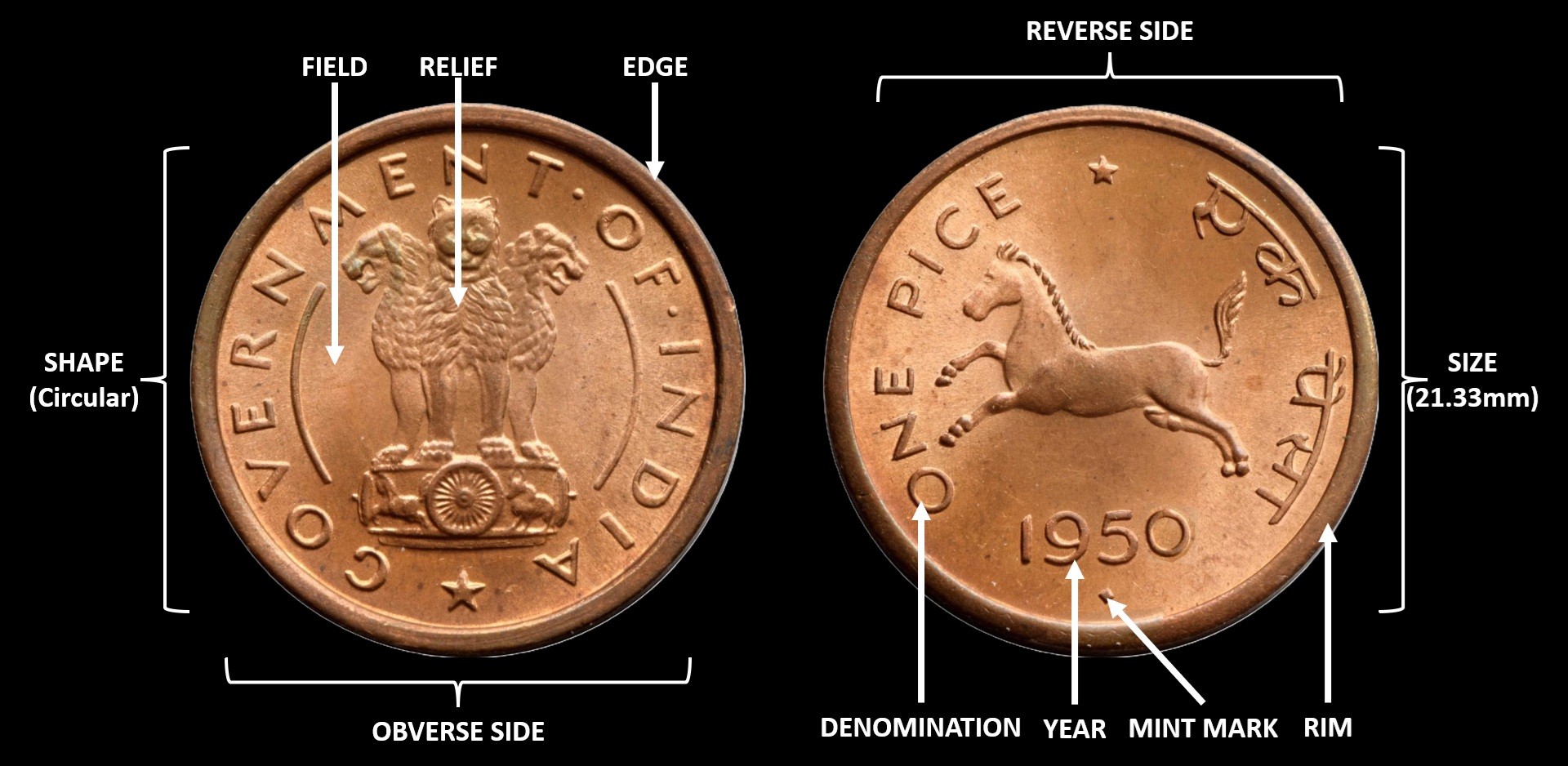
Obverse
The obverse is commonly referred to as the "heads" side of the coin. It usually features the most prominent image — often a national emblem, ruler's portrait, or symbolic icon that reflects the issuing authority. This side is considered the 'face' of the coin and is typically the more important of the two sides in terms of national representation.
Reverse
The reverse, or "tails" side, typically carries the denomination (face value), year of issue, and sometimes commemorative designs or thematic elements. This side complements the obverse and often includes visual representations of events, achievements, or cultural symbols.
Legend
The legend consists of inscriptions found along the rim or across the coin's field. These texts often include the name of the country, the issuing authority (like the Reserve Bank), commemorative titles, or mottos. The legend is crucial for identifying a coin's origin and purpose.
Portrait
Portraits are a key artistic element, usually depicting historical figures, monarchs, or national leaders. The style and execution of a portrait can reflect the era's artistic norms and are sometimes updated with new reigns or political changes.
Field & Relief
The field refers to the flat, background surface of the coin, while the relief encompasses all the raised design elements — such as text, imagery, or borders. A coin with a well-preserved relief and minimal wear in the field is considered in better condition.
Rim
The rim is the raised boundary encircling the coin. It serves as protection for the design from wear due to circulation and makes stacking and automated handling easier. Rims can also feature patterns or text, adding both functionality and decoration.
Mint Mark
The mint mark is a small symbol or letter denoting the minting facility. For example, Indian coins may include marks like a diamond (Mumbai), star (Hyderabad), dot (Noida), or nothing (Kolkata). Mint marks are vital in identifying a coin's origin and determining variations in collectible series.
Date
The date indicates the year of minting. It helps place the coin within historical and political contexts and is a major factor in determining its numismatic value. Some coins also show different dates on the die and the planchet, which can indicate special issues or errors.
Edges
The edge is the outermost perimeter of the coin. It may be smooth (plain), reeded (grooved), or decorated with security features or lettering. Special edge treatments help deter counterfeiting and make denominations easily distinguishable by touch.
Shape
Although round is the most common shape, coins may also be square, polygonal, scalloped, or uniquely shaped for commemorative purposes. The shape can help users distinguish denominations quickly or emphasize a special issue's uniqueness.
Size
Coin size is measured by diameter or by dimensions for non-round shapes. Larger coins are often higher in value or meant for commemorative purposes, while smaller coins are typically of lower denominations.
Metal Composition
Coins are minted from metals or alloys selected for durability, cost-effectiveness, and appearance. Common compositions include copper, nickel, aluminum, bronze, stainless steel, and bimetallic combinations. Changes in metal can signify economic shifts or material scarcity.
Orientation
Orientation refers to how the obverse and reverse align. In coin orientation (e.g., US coins), flipping the coin top-to-bottom reveals the reverse upright. In medal orientation (e.g., UK and India), a left-to-right flip is used. It affects both design and authenticity checking.